
5 Love Languages Quiz: Your Comprehensive Guide to Assessments
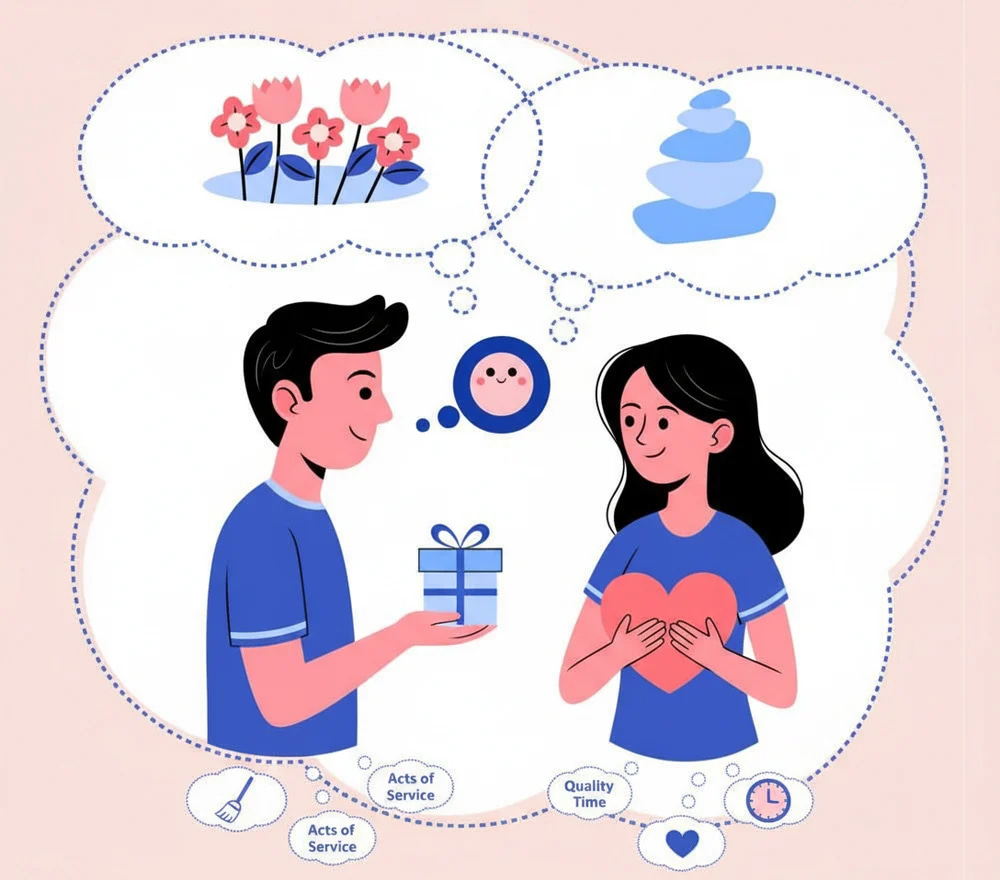
5 Love Languages Quiz for Couples
Get StartedWhat Is the Love Languages Framework?
Relationships flourish when people send and receive care in ways that feel meaningful. The love languages framework captures this truth by grouping common expressions of affection into five practical categories: Words of Affirmation, Quality Time, Acts of Service, Gifts, and Physical Touch. Instead of guessing how to connect, the model offers a shared map for expressing warmth, reinforcing trust, and de-escalating conflict. It also helps you articulate boundaries, notice blind spots, and translate abstract feelings into observable behaviors that can be practiced. Because the language of care varies across cultures and families, the approach functions as a starting point rather than a rigid rulebook. Many readers begin with the 5 love languages quiz to get oriented.
Self-awareness grows fastest when reflection is paired with data, even if the data is simple and personal. Many readers prefer taking the 5 love language quiz to anchor fuzzy feelings to practical behaviors. By naming top preferences and clarifying secondary needs, partners, friends, and teammates can align on the habits that matter most.
- Builds a common vocabulary for appreciation without psychobabble.
- Turns one-size-fits-all gestures into targeted actions that land.
- Reveals mismatches quickly, reducing resentment and confusion.
- Supports boundary-setting and repair after friction or disappointment.
Why Taking the Quiz Matters: Benefits and Insights
Closeness is not just a feeling; it is a pattern of repeated micro-actions that either compound or erode connection. An assessment creates a snapshot of how those micro-actions are perceived, making it easier to plan intentional changes. Rather than arguing about who is “right,” you can examine preferences and design experiments. Over weeks, small shifts such as a focused 15-minute check-in or a clear “I appreciate how you...” note start to move the needle. The beauty of this method is its simplicity: it generates momentum without requiring deep clinical analysis.
Numbers are not the goal, yet a structured format can make reflection less overwhelming for busy people. For clarity lovers, the structured format of the 5 love languages quiz test turns vague hunches into data-driven insights. With that clarity, you can prioritize two or three high-impact behaviors and create rituals that stick.
- Faster alignment on what actions feel most caring to each person.
- Reduced friction during high-stress seasons such as new jobs or new babies.
- Better celebration planning because “meaningful” becomes specific.
- Improved follow-through via simple, repeatable habits and checklists.
The Five Languages at a Glance
Before you apply the framework, it helps to see the five love languages side by side. Each language points to different signals that say “you matter” in everyday life. When you compare them, you can spot the gap between what you tend to give and what your partner or teammate actually values. That awareness makes your efforts more efficient and more heartfelt at the same time.
| Love Language | What It Emphasizes | Everyday Signals | Practical Starters |
|---|---|---|---|
| Words of Affirmation | Encouraging, specific verbal appreciation | Thank-you notes, praise, sincere compliments | Send a midweek message naming one concrete win |
| Quality Time | Undivided attention and presence | Device-free conversations, shared activities | Schedule a 20-minute walk focused on listening |
| Acts of Service | Helpful actions that reduce burdens | Doing chores, handling logistics, pitching in | Ask, “What task would lighten your load today?” |
| Gifts | Thoughtful tokens that show you were thinking of them | Small surprises, symbolic mementos, favorites | Curate a snack kit or a tiny keepsake with a note |
| Physical Touch | Affection through safe, welcomed contact | Hugs, handholds, cuddles, supportive pats | Initiate a consent-based, comforting embrace |
Once you recognize patterns, you can design weekly rhythms around the right cues and rituals. After scanning the table, you can map patterns by using the quiz 5 love languages as a simple checklist between weekly check-ins. With that cadence, momentum builds without overcomplication.
Deepening Romance and Partnership
Romantic bonds thrive when care is both consistent and personalized. Partners often assume their favorite gestures land the same way for the other person, and that’s where misfires occur. The fix is to translate love into the dialect your partner hears most clearly, then to structure tiny practices around that dialect. Over time, those micro-practices accumulate into a dependable sense of security, which is the foundation for playful spontaneity.
Repair becomes easier when you can name what went missing and how to replenish it quickly. Partners often report quicker repair after conflict when they review results from the 5 love languages quiz couples and agree on two concrete habits. With shared language, apologies and amends stop feeling generic and start feeling targeted.
- Swap generic “date night” for a ritual tuned to the primary love language.
- Use reflective listening to validate needs before suggesting solutions.
- Co-create a weekly “connection menu” with three small, specific actions.
- Track wins in a shared note to reinforce positive cycles and continuity.
Thriving at Work with Love Languages
Professional relationships rely on trust, clarity, and recognition, and the same human psychology applies in offices and on remote teams. Appreciation is not fluff; it is a performance amplifier when delivered in a way that feels authentic to the recipient. When colleagues feel accurately seen, discretionary effort and collaboration quality increase. This is especially vital in hybrid environments where intent can be lost in text and calendar overload.
Managers need simple tools for personalization that avoid awkwardness or favoritism. Team leads often kick off retros with the 5 love languages workplace quiz to frame appreciation in a way that feels authentic across roles. The resulting insights make one-on-ones more focused and enable leaders to recognize people without defaulting to the same gestures.
Sustainable culture requires rituals that are easy to teach and repeat across departments. In onboarding, HR pros find the 5 love languages work quiz helpful for customizing recognition programs that avoid one-size-fits-all clichés. Those small adjustments reduce friction and make teamwork feel less transactional.
- Add “recognition preferences” to team charters and role handbooks.
- Balance praise in public channels with targeted notes or quick favors.
- Schedule brief, purposeful check-ins dedicated to connection, not tasks.
- Rotate celebration formats so everyone experiences their preferred style.
Cost, Access, and Choosing the Right Version
People often wonder whether to pay for a robust assessment or to start with a lightweight option. The best choice depends on your goals: a quick insight for dinner conversation, or a deeper dive for counseling, coaching, or team development. Advanced versions sometimes include nuanced sub-scores, tips, and worksheets that make habit-building easier. If you are experimenting or introducing the concept to a group, beginning simply can reduce friction and increase adoption.
Accessibility matters for students, families, and community groups that may be testing concepts on a tight budget. Budget-conscious readers appreciate that the 5 love languages quiz free choice offers a quick starting point without a paywall. Starting small is perfectly valid as long as you translate the results into specific weekly actions.
Sampling multiple sources can reveal presentation styles you find clearer or more motivating. Comparing features can save time, and a curated link list pointing to the free 5 love languages quiz helps people sample before investing in premium versions. Once you find a format that clicks, commit to a routine so insight becomes momentum.
- Decide whether you need group reporting, coaching prompts, or printables.
- Favor versions with clear next-step suggestions and real-life examples.
- Pick tools that are mobile-friendly for on-the-go reflection and sharing.
- Revisit results every quarter to recalibrate as seasons and stressors change.
Origins, Science, and Balanced Critiques
Any popular framework invites both adoption and scrutiny, and that healthy tension improves how we use it. The love languages model emerged from counseling rooms and everyday observations, not laboratory trials, which means users should apply it with curiosity rather than dogma. Researchers generally agree that expressed appreciation and responsive support correlate with satisfaction, while arguing about the best way to measure those constructs. Pragmatically, the model works as a coaching heuristic: it gets people talking specifically about care, which is the first step toward better habits.
Attribution matters when you trace ideas and want to use them responsibly in your community or organization. Historically, many first encountered the idea through the 5 love languages Gary Chapman quiz, which popularized a memorable framework for everyday connection. Citing origins honors intellectual lineage and invites learners to consult the source material directly.
Global audiences adapt concepts to local norms so the ideas remain approachable across contexts. Outside North America, some translations label the assessment the 5 languages love quiz, reflecting regional norms yet keeping the core model intact. That flexibility shows up in classrooms, faith communities, and corporate trainings alike.
- Treat results as conversation starters, not diagnostic labels.
- Context matters: consent, culture, and personal history shape preferences.
- Blend the model with proven practices like active listening and goal-setting.
- Measure progress behaviorally: track rituals, not just scores or labels.
Personalizing Your Results and Next Steps
Information becomes transformation when it is turned into small, repeatable actions. Start by summarizing your top two languages, then write a short list of weekly rituals that target them. Pair those rituals with triggers you already have, such as morning coffee or end-of-day shutdowns, so they stick. Share your plan with a partner or teammate to create accountability and celebrate visible wins.
Guides and coaches often need a concise tool that aligns goals with meaningful gestures. If you coach couples or teach family life skills, referencing the 5 love languages quiz gives you a common vocabulary for labs, homework, and check-ins. That shared language shortens the path from intention to action.
Personal ownership makes the process stickier, especially when seasons of life shift preferences. For journaling, it helps to snapshot your findings by writing a headline such as the my 5 love languages quiz and then listing experiments to try this month. Reviewing those notes every few weeks turns insights into a living practice.
- Choose one five-minute ritual per day and one 30-minute ritual per week.
- Set calendar nudges for gratitude notes, shared walks, or helpful tasks.
- Track what lands well and prune what feels performative or forced.
- Reassess quarterly and refine your connection menu together.
Faq: Common Questions About Love Languages Assessments
How accurate are love languages assessments?
They are directional tools, not medical diagnostics. Accuracy improves when you answer honestly, revisit results after life changes, and translate findings into specific behaviors you can test in daily life.
Can love languages change over time?
Yes, preferences can shift with new roles, stressors, or healing experiences. That is why periodic check-ins and seasonal recalibration keep your rituals aligned with current needs.
What if partners have completely different top languages?
That difference is manageable when you co-create a shared plan. Each person can commit to one small, high-impact action for the other, then swap feedback weekly to keep progress tangible.
Do love languages apply to friendships and families?
Absolutely, because appreciation and secure bonds matter in every relationship. Adjust gestures to context and consent, then use simple routines to make care visible and consistent.
Is this framework supported by research?
While the model itself is popularized outside laboratory settings, it aligns with well-established findings on responsiveness, gratitude, and affirmation. Treat it as a pragmatic scaffold that helps you practice evidence-backed habits.